
Beyond the Crown: SMP for Women in Charlotte with Temple Thinning
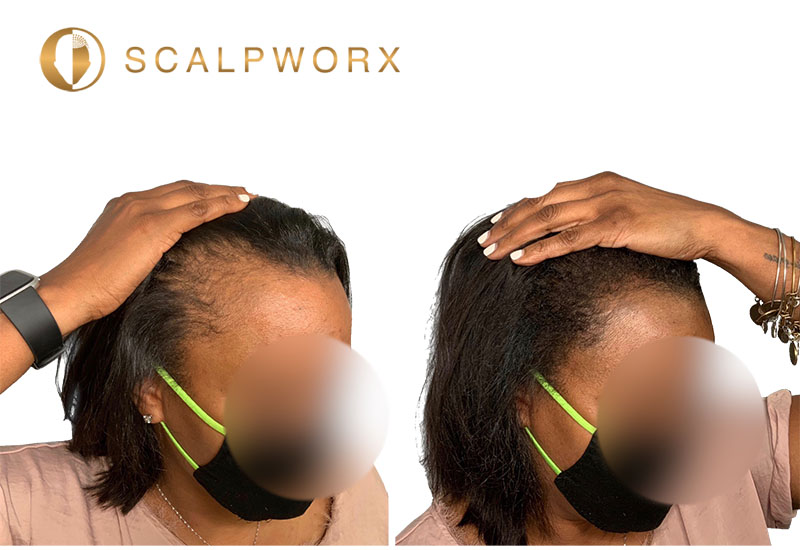
A Fuller Frame Begins at the Temples
Hair loss does not only show up at the crown. For many women, thinning at the temples changes the way the whole hairline frames the face. It can make the face appear wider, leave the hairline looking uneven, and make a ponytail, updo, or side part feel more exposing than it used to.
At Scalpworx, we understand that temple thinning can feel especially personal because it is visible from so many angles. Scalp micropigmentation, also called SMP, is a non-surgical cosmetic option that uses carefully layered pigment impressions to reduce the contrast between visible scalp and surrounding hair. Rather than changing your natural hair, the goal is to create the look of fuller density and a more balanced hairline.
Temple-focused work should always be thoughtful and conservative. We do not approach it as a way to create a harsh, overly low, or overly defined hairline. A natural result should complement your features, skin tone, hairstyle preferences, age, and the density you already have.
How SMP for Women in Charlotte Supports Temple Balance
The temples do a great deal of visual work. They connect the front hairline to the sides of the head, frame the face, and affect how full your hair appears when viewed from the front, side, and back. Even mild thinning in this area can make thicker hair nearby look disconnected.
With SMP for women in Charlotte, we can place pigment strategically in sparse areas to soften the look of visible scalp. This helps the temple area blend more naturally into surrounding hair and can make the hairline appear more continuous. For women who enjoy styles that reveal the sides of the head, such as tucked hair, ponytails, buns, or side-swept looks, that visual continuity can matter a lot.
SMP is cosmetic camouflage. It does not grow hair, and it does not stop hair loss. Instead, it can work alongside the routine you already follow, whether that includes dermatologist-guided care, topical products, hair fibers, or thoughtful styling choices.
Before we recommend a treatment direction, we look at the full picture, including:
- Your pattern of thinning and current hair density
- The condition of your scalp and surrounding hair
- The amount of contrast between your scalp and hair color
- How you usually part, style, and wear your hair
- Whether temple work alone or a wider density plan makes sense
This assessment matters because no two temple areas thin in exactly the same way. One side may be more sparse than the other, or thinning may continue farther back along the side profile. A plan should respond to what is actually present, not rely on a one-size-fits-all hairline shape.
What a Natural Temple SMP Design Looks Like
A natural-looking result starts with design, not just pigment. Before treatment begins, we consider facial symmetry, the shape of your existing hairline, natural temple recession, hair color, skin tone, and the hairstyles you feel most comfortable wearing. The best design is usually one that supports your existing features without drawing attention to itself.
Real hair growth is not a solid wall of color. There is softness, variation, and a gradual shift from denser areas to lighter edges. That is why temple SMP should avoid a dark, uniform block of pigment. Instead, we build a subtle transition that blends into existing hair and stays lighter near the outer edges.
A conservative approach also helps address a common concern: “Will it look artificial?” The answer depends on how the work is planned and built. Custom pigment selection, careful placement, and multiple sessions give us room to layer density gradually. You can see how the treatment is developing before more density is added, which helps keep the final appearance soft and age-appropriate.
Natural temple work often includes:
- A gentle blend between existing hair and thinner areas
- Pigment tones chosen to work with your scalp and hair color
- Uneven, realistic-looking variation rather than a straight stamped line
- Gradual density building over separate sessions
- A design that considers both the front view and side profile
The aim is not to make your hairline look “perfect.” It is to make it look believable, balanced, and more in line with the way you want your hair to frame your face.
Preparing for SMP for Women in Charlotte
A consultation for SMP for women in Charlotte gives us time to understand what you are seeing in the mirror and what you hope will change. We discuss your goals, examine the thinning pattern, review relevant medical history and scalp health considerations, and talk through whether temple restoration, overall density work, scar camouflage, or another approach fits your needs.
Treatment is usually completed in multiple sessions. Layering pigment over time helps create a softer, more realistic result than trying to add all density at once. The number of sessions can vary based on the size of the temple area, your desired appearance, your skin type, and how your scalp retains pigment.
Aftercare is part of the process, too. Following each session, we may ask you to avoid activities and products that could interfere with healing or pigment retention for a short time. Your personalized instructions may include avoiding:
- Heavy sweating and intense exercise
- Swimming or prolonged water exposure
- Direct sun exposure on the treated area
- Certain scalp products during the initial healing period
We provide aftercare guidance based on your treatment plan, and it is important to follow it closely. Giving the scalp time to heal between sessions supports a more even and lasting cosmetic result.
Planning Your Temple Treatment in Fall
Autumn can be a practical time to begin SMP, especially for women thinking ahead to seasonal gatherings, family photos, and indoor social events. Starting in the fall can allow room for multiple sessions at a comfortable pace, without turning the process into a rushed cosmetic change.
That extra breathing room can be helpful for temple work, where subtle layering makes a difference. Rather than making a dramatic shift overnight, we can build a fuller-looking frame gradually and thoughtfully. The result should feel like a natural part of your overall look, not something that competes with it.
Your calendar should be part of the conversation. Travel, outdoor plans, fitness routines, and holiday commitments can all affect when sessions and aftercare fit best. Planning around your real life makes it easier to give your scalp the care it needs between appointments.
Temple thinning can affect confidence, hairstyle choices, and how comfortable you feel seeing your profile in photos. Still, it does not have to define your reflection. A well-planned SMP treatment focuses on softening contrast, restoring visual balance, and helping your hairline look more connected to the hair you already have.
Restore A Hairline That Feels Like You
At Scalpworx, we tailor every treatment to your features, hair color, and preferred level of density. Learn how SMP for women in Charlotte can create a subtle, natural-looking finish designed around your goals. Ready to discuss your options? Contact us for a personal consultation.