
Hair Transplant Scar Camouflage in Atlanta
Scars on the scalp can be a source of self-consciousness and insecurity for many individuals. Scalp Micropigmentation (SMP) offers a revolutionary solution for scar camouflage, effectively concealing scars and creating a seamless appearance — from hair transplant scars and trauma scars to surgical scars.
Free photo quote in 1 business day · No obligation
SMP for Scar Camouflage: Enhancing Confidence
Scalp micropigmentation for scar camouflage involves the precise application of pigments to the scarred areas of the scalp, blending them with the surrounding hair to create a uniform and natural-looking appearance. This procedure is particularly beneficial for individuals with hair transplant scars, trauma scars, or surgical scars, providing them with renewed confidence and self-esteem.
The visual effect is powerful: what used to catch the eye now blends into normal density. For clients who've lived with visible scarring for years, this is often the first time they stop thinking about it.
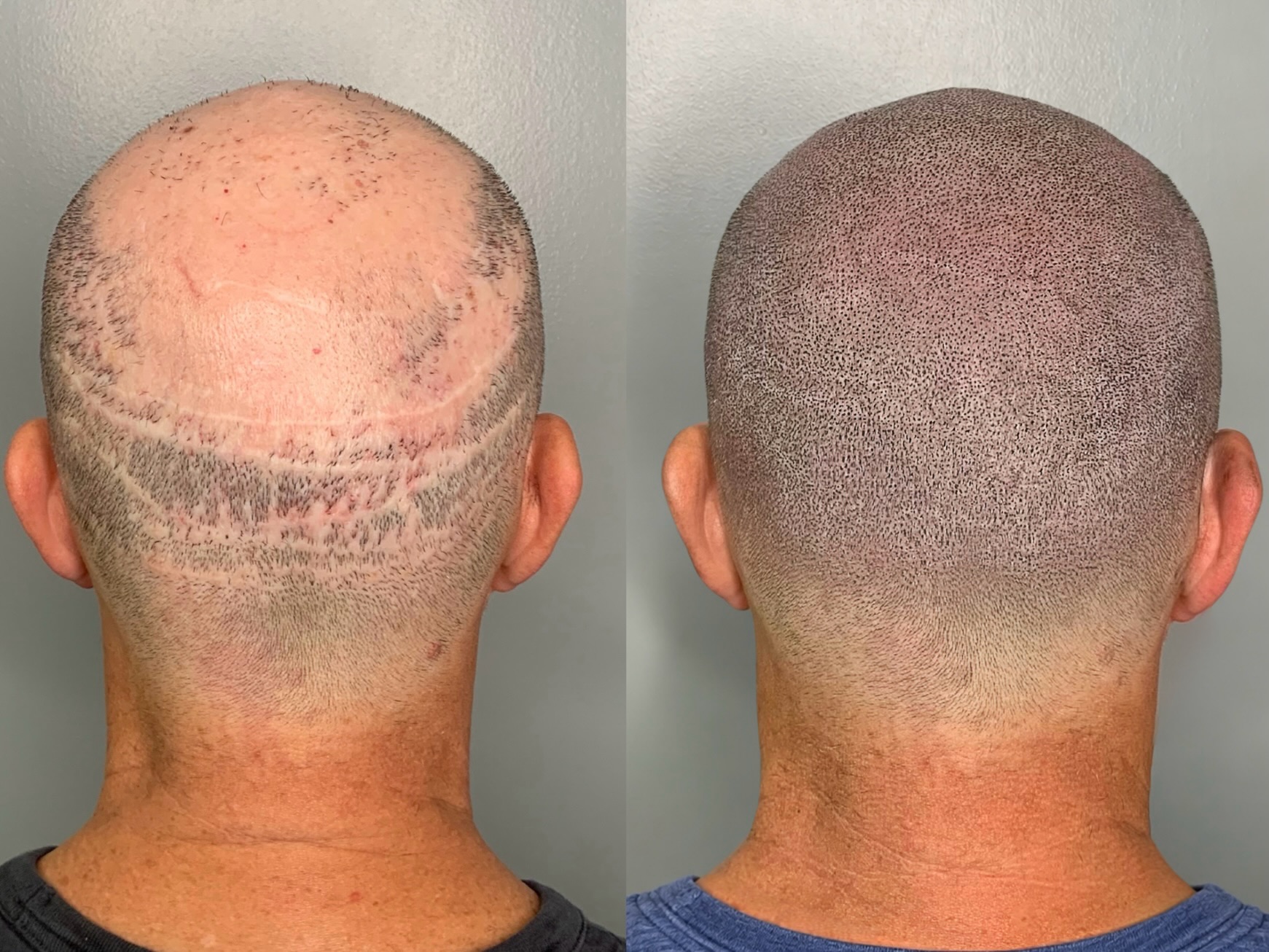
FUT vs FUE Scars: How Each Is Treated
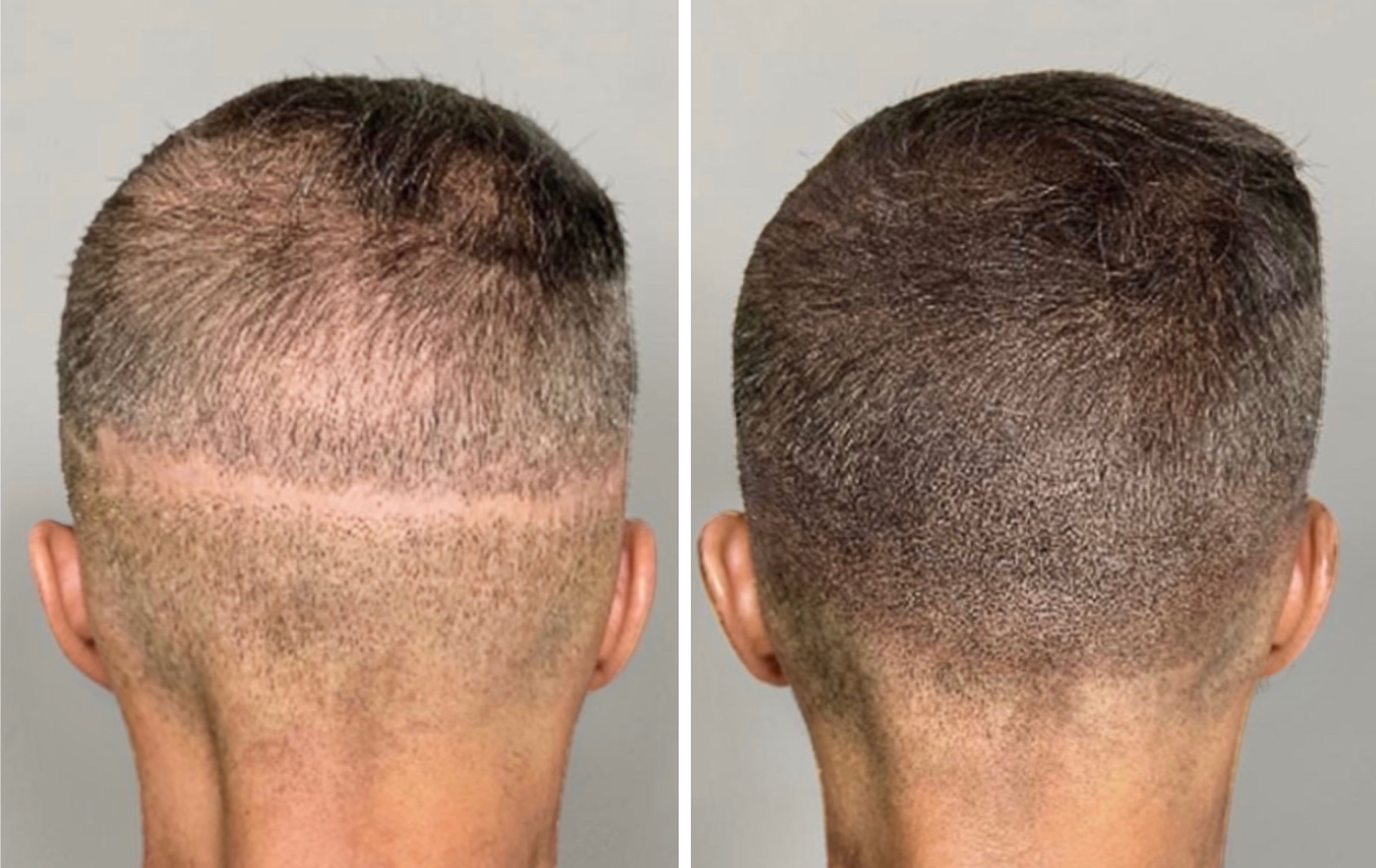
FUT (strip): a linear scar across the donor area. SMP pigments inside the scar line and blends the density on either side. FUE (dot): hundreds of tiny circular scars. Each is pigmented individually to disappear into the surrounding density. Both respond well to SMP — the technique just differs by scar type.
Benefits of Scalp Micropigmentation for Scar Camouflage
Effective scar coverage — SMP effectively conceals scars on the scalp, creating a seamless and uniform appearance.
Natural-looking results — the pigments used in SMP closely match your hair color and skin tone, ensuring realistic and flattering results.
Versatile solutions — SMP can address various types of scars, including hair transplant scars, trauma scars, and surgical scars, providing customized solutions for each client.
Long-lasting results — SMP results are semi-permanent and can last for several years with proper care and maintenance, offering long-term benefits.
Ready to see what SMP can do for you?
Free consultation. Honest assessment. One dedicated artist from start to finish.
Free · No obligation · Response within 24 hours
Why the 1-Year Healing Rule Exists
Scar tissue continues remodeling for months. Pigmenting too early risks migration and fading. One year gives collagen time to stabilize and hold pigment predictably. Scars must be fully healed — at least one year old — so collagen holds pigment properly.
What Scar Tissue Does to Pigment (Why This Is Expert Work)
Scar tissue is denser and less vascular than normal scalp. Pigment behaves differently — depth, needle angle, and pass count all change. This is not a job for a rotating tech. Justin has personally camouflaged hundreds of scars and understands how each scar type responds.
What clients ask us most.
Can every scar be hidden?
Most. Some very raised or actively-healing scars need more time. Justin will assess in the consultation and be honest with you either way.
Will scar SMP need more sessions?
Scar tissue holds pigment differently than healthy scalp. It sometimes requires an extra session or a longer session. Your quote will account for this.
Does scar SMP cost more?
Usually slightly more per hour of work, because it takes more skill and time. Your free photo quote will give you a specific number.
Are older transplant plugs / cobblestone scarring fixable?
Yes — this is a specialty area for Scalpworx. Blending SMP around plug scarring can dramatically improve the visual outcome.
Do I need to wait after a recent transplant?
Yes. Scars must be fully healed — at least one year old — so collagen holds pigment properly.
Is SMP safe for scar tissue?
Yes. When performed by an experienced artist on fully-healed scars, SMP is safe and effective. Justin evaluates every scar in the consultation before treatment.
Can large scars be covered?
Yes. Larger scars typically require additional time and may benefit from an extra session, but even significant strip and trauma scars can be blended convincingly.
How many sessions will I need?
Most scar-camouflage cases fit into three sessions. Denser scar tissue occasionally needs a fourth pass — Justin will tell you upfront in your quote.