
Traction Alopecia Solutions for Atlanta Patients Considering SMP
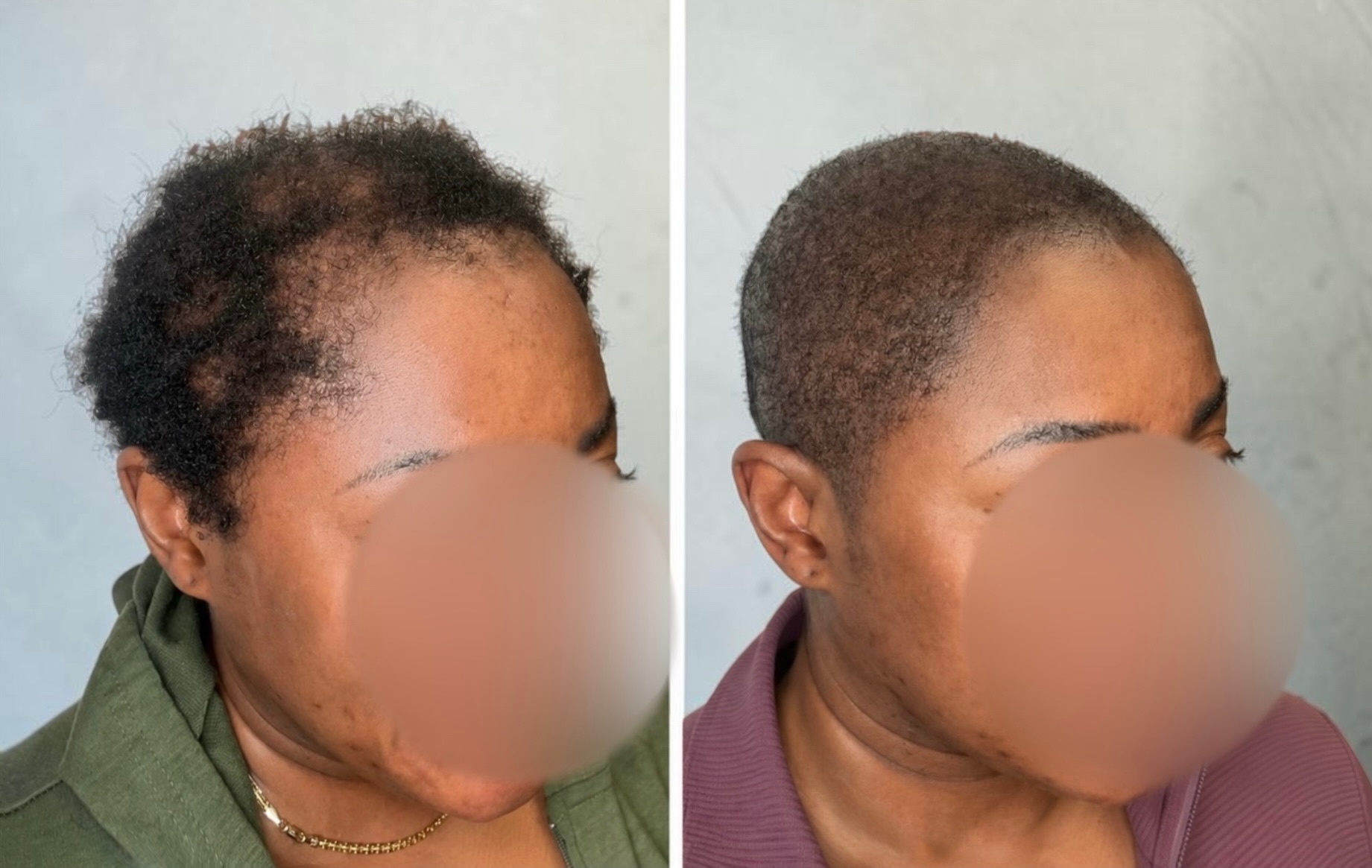
Restore Hair Confidence Before Atlanta's Fall Social Season
Traction alopecia can make the hairline, temples, crown, or edges look thinner than you want, especially when those areas frame your face. We often speak with Atlanta clients who have noticed changes after years of tight braids, locs, ponytails, extensions, wigs, or other styles that pull on the scalp.
Scalp micropigmentation, often called SMP, is a non-surgical cosmetic procedure. We place tiny pigment impressions in the scalp to create the appearance of closely cropped hair follicles. SMP does not regrow hair, but it can reduce the contrast between sparse areas and the surrounding hair, helping the scalp look more balanced.
For people researching traction alopecia in Atlanta, the goal is rarely a one-size-fits-all hairline. Our approach considers your skin tone, current hair density, facial proportions, and the hairstyle you prefer. Depending on your needs, SMP may support a natural-looking hairline, create the look of added density, camouflage appropriate scars, or complement a shaved-head style.
Late summer can be a helpful time to explore your options before fall brings a fuller social calendar. Back-to-school events, work gatherings, cooler-weather style changes, and holiday photos can all make people more aware of how they feel about their hair. Planning ahead gives you time to discuss a treatment approach that works around your routine.
Understand Why Tension Can Lead to Lasting Hair Loss
Traction alopecia develops when repeated pulling places stress on hair follicles over time. It can affect people of all genders and hair textures, particularly when a hairstyle creates ongoing tension along the frontal hairline, temples, edges, or crown.
Early signs can be easy to overlook, but discomfort should not be ignored. Common concerns may include:
- Scalp soreness or tenderness after styling
- Itching, bumps, or irritation near the hairline
- Broken hairs around the edges
- Thinning temples or a widening hairline
- Areas where the scalp begins to show through
When tension is reduced early, some follicles may recover. Long-standing traction alopecia, however, may lead to more lasting follicle damage, leaving smooth or sparse areas with limited regrowth. Because hair loss can have many causes, we recommend speaking with a qualified medical professional or dermatologist if you have sudden, painful, inflamed, or unexplained hair loss.
That distinction matters when considering cosmetic restoration. SMP may be an option when you want to visually rebuild the appearance of a denser, more defined hairline without surgery. Rather than changing how hair grows, the treatment helps sparse areas look less noticeable and more intentional.
Know When SMP Can Restore the Look of Hair Density
SMP can be tailored to different traction-related concerns. For some clients, a subtle density effect works best with longer existing hair. Others prefer a fuller-looking front hairline or a close-shaved appearance with the look of even follicle coverage across the scalp.
Hairline restoration may help when thinning affects the temples, recessed edges, or front of the scalp. A natural result should not look overly sharp or stamped on. We carefully discuss the softness, shape, and placement of the hairline so it fits your age, face shape, and personal style.
Density enhancement is another option for men and women who still have hair but notice too much scalp showing through sparse areas. Small pigment impressions can lessen the visible contrast between hair and scalp. This can be especially useful under bright summer sunlight, overhead office lighting, and camera flashes.
In some cases, scar camouflage may also be considered for traction-related scarring or scars from past hair procedures. An in-person assessment is important because scar texture, scalp condition, skin tone, and the stability of hair loss all affect whether SMP is appropriate.
Prepare for an Atlanta SMP Consultation This Late Summer
A consultation gives us time to understand what you want to see in the mirror and what is realistic for your scalp. We review the treatment area, discuss your hair-loss history, and talk through the look you hope to achieve, whether that means a softer edge, added density, or a shaved-head effect.
It can help to bring visual examples of your preferred hairline or hairstyle. During the discussion, we can cover details such as:
- Pigment shade and how it may complement your skin tone
- Hairline softness and placement
- Areas that may benefit from density work
- The expected number and spacing of treatment sessions
- How SMP can blend with existing hair or a shaved style
We also encourage you to share relevant information about past hairstyles, scalp treatments, medical concerns, medications, and previous hair restoration procedures. Active irritation, infection, open sores, or recently inflamed scalp conditions should be addressed with appropriate medical guidance before any cosmetic treatment is considered.
Atlanta's late-summer heat can also influence your planning. Sweating, pool time, vacations, and outdoor activities may affect aftercare timing. We discuss spacing between sessions and any activity limits so you can make informed choices around your schedule.
Protect Your Results with Healthier Hair Habits
Cosmetic restoration and scalp-friendly habits can work well together. While SMP can improve the appearance of thinning, reducing ongoing tension remains important for protecting the hair you still have and keeping your scalp comfortable.
Small styling changes may make a meaningful difference over time. We encourage you to consider lower-tension choices, including looser braids, gentler updos, breaks between styles that pull on the edges, and less frequent use of heavy extensions. Persistent tenderness is often a sign that a style is too tight.
Support from knowledgeable professionals can be helpful, too. A dermatologist can help identify whether hair loss appears traction-related or may involve another concern. A trusted stylist can also recommend protective styling practices that place less repeated stress on vulnerable areas.
Aftercare matters after SMP as well. We provide individualized guidance about washing, sweating, sun exposure, scalp products, healing, and follow-up sessions. Pigment naturally softens over time, and some people may benefit from periodic touch-ups to maintain the appearance they prefer.
Make a Thoughtful Plan for Your Hairline
Every case of traction alopecia is different. A personalized assessment can help determine whether SMP is a suitable cosmetic option, what areas may be treated, and what kind of natural-looking result is realistic for your hair, scalp, and lifestyle.
The most helpful next step is to address scalp discomfort early, protect your existing hair from repeated tension, and learn about professional options that can help sparse areas look balanced and confidence-building.
Achieve A Natural-Looking, Restored Hairline
At Scalpworx, we create personalized SMP plans that complement your hair pattern, skin tone, and aesthetic goals. Learn how scalp micropigmentation can support patients with traction alopecia in Atlanta and provide the appearance of fuller coverage. To discuss your options with our team, contact us for a consultation.